We jhave just submitted a grant proposal to the Gates Foundation.
Title: "Pygmies of the Americas"? The causes of Maya stunting.
In 5 months we will know. Fingers crossed and let's hope for the best.
More soon...
Tuesday, 17 May 2011


Wednesday, 11 May 2011
Gates Foundation Grant Proposal
We have been very busy working on a Gates Foundation proposal. More in a week after we submit. Fingers crossed!
Sunday, 17 April 2011
Successful conference
We had a very successful conference in Minneapolis. Hannah did a great presentation. More plans for future research in Mexico are being cooked. Well done all!
Thursday, 14 April 2011
Poster presented at the HBA conference - Minneapolis 13-14 April 2011


Wednesday, 6 April 2011
Hannah is shining again
Hannah just submitted another paper to the American Journal of Human Biology
Wilson H, Dickinson F, Griffiths P, Azcorra H, Bogin B, Varela-Silva MI (2011) How useful is BMI in predicting adiposity indicators in a sample of Maya children and women with high levels of stunting and short stature?, American Journal of Human Biology
Congratulations to Hannah and to all the team...we are hoping for good reviews!
Wilson H, Dickinson F, Griffiths P, Azcorra H, Bogin B, Varela-Silva MI (2011) How useful is BMI in predicting adiposity indicators in a sample of Maya children and women with high levels of stunting and short stature?, American Journal of Human Biology
Congratulations to Hannah and to all the team...we are hoping for good reviews!
Friday, 1 April 2011
Hannah's paper published on the Am J Human Biology
Congratulations to Hannah. Her first paper has just been published in the American Journal of Human Biology.
"Wilson et al (2011). Logistics of using the Actiheart physical activity monitors in urban Mexico among 7- to 9-year-old children. Am J Hum Biol. 2011 Mar 29. doi: 10.1002/ajhb.21150. [Epub ahead of print.
It is also the first publication that came out of the project funded by the Wenner-Gren Foundation.
http://www.ncbi.nlm.nih.gov/pubmed?term=wilson+AND+actiheart
"Wilson et al (2011). Logistics of using the Actiheart physical activity monitors in urban Mexico among 7- to 9-year-old children. Am J Hum Biol. 2011 Mar 29. doi: 10.1002/ajhb.21150. [Epub ahead of print.
It is also the first publication that came out of the project funded by the Wenner-Gren Foundation.
http://www.ncbi.nlm.nih.gov/pubmed?term=wilson+AND+actiheart
Friday, 25 March 2011
Presenting at the Human Biology Association annual meeting (13-14 April, MN)
Human Biology Association 2011 Annual Meeting, 13-14 April, MN
Presenting a poster: "Conducting research among the Maya in the Yucatan: how a training component can take us a long way"
Co-authoring a presentation: "Intergenerational influence on children's fat indicators in 7-9 year-old Mexican Mayans (Hannah is the first author and presenter)
abstracts here: http://onlinelibrary.wiley.com/doi/10.1002/ajhb.v23.2/issuetoc
Presenting a poster: "Conducting research among the Maya in the Yucatan: how a training component can take us a long way"
Co-authoring a presentation: "Intergenerational influence on children's fat indicators in 7-9 year-old Mexican Mayans (Hannah is the first author and presenter)
abstracts here: http://onlinelibrary.wiley.com/doi/10.1002/ajhb.v23.2/issuetoc
Friday, 11 March 2011
Society, Biology and Human Affairs
Check it out...the online version of one of the Biosocial Society's journals...
Sunday, 27 February 2011
Our project is on The Wenner-Gren Foundation website
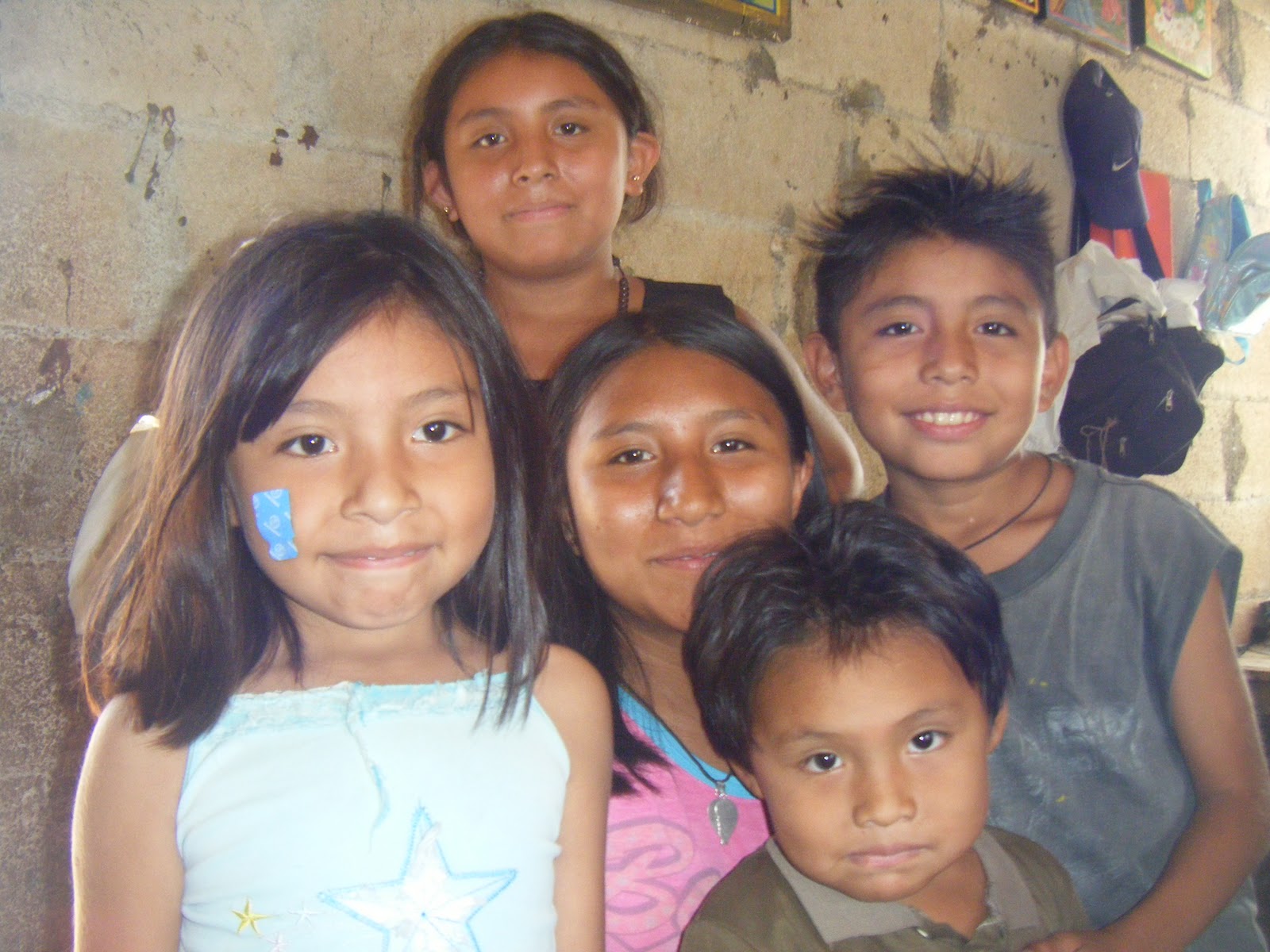 Give it a look...that's us
In this photo, some of the children we assessed. The girl on the left has a BioScan electrode stuck on her face. These electrodes were a constant source of amusement for the children.
Friday, 18 February 2011
Fieldwork in 2010
Just added two new pages. One with details of our fieldwork during 2010
http://bemicelu.blogspot.com/p/fieldwork-2010.html
and other with information about the training sessions we run at CINVESTAV for 4 days. However, for some reason, I was unable to upload photos on this one. I will try again later. Enjoy!
http://bemicelu.blogspot.com/p/fieldwork-2010.html
and other with information about the training sessions we run at CINVESTAV for 4 days. However, for some reason, I was unable to upload photos on this one. I will try again later. Enjoy!
Tuesday, 15 February 2011
Short stature of the Maya
Hannah took this photo on April 2010. It's another example of how short Maya women are...
There was this idea, for a while, that Maya were genetically short and that they were basically "fine" and that's "just the way they are"...This is not true.
The Maya have been suffering for a long time. The Maya carry a legacy of poverty, social-political-economical pressure and poor health that is reflected in their physical growth, mainly in their height, as well as in many other health aspects.
Our research with Maya migrants in Florida (Bogin et al 2002) has shown that Maya children who migrated to the USA are, on average, 11cm taller than their counterparts in Guatemala. These results show the powerful effects of the environment on physical growth. Read more here.
http://www.ncbi.nlm.nih.gov/pubmed/12400036

There was this idea, for a while, that Maya were genetically short and that they were basically "fine" and that's "just the way they are"...This is not true.
The Maya have been suffering for a long time. The Maya carry a legacy of poverty, social-political-economical pressure and poor health that is reflected in their physical growth, mainly in their height, as well as in many other health aspects.
Our research with Maya migrants in Florida (Bogin et al 2002) has shown that Maya children who migrated to the USA are, on average, 11cm taller than their counterparts in Guatemala. These results show the powerful effects of the environment on physical growth. Read more here.
Bogin B, Smith P, Orden AB, Varela Silva MI, Loucky J. (2002) Rapid change in height and body proportions of Maya American children.Am J Hum Biol. 2002 Nov-Dec;14(6):753-61.
http://www.ncbi.nlm.nih.gov/pubmed/12400036
(copyright Hannah Wilson, 2010)
Monday, 14 February 2011
A new page has been created
A new page has been created. Check it out "Our Research Team"...with nice photos. More soon.
Sunday, 13 February 2011
The Biosocial Society
Ines is also the Chair of the Biosocial Society.
For more information go to http://www.biosocsoc.org/
or follow us on Facebook www.facebook.com/biosocsoc
For more information go to http://www.biosocsoc.org/
or follow us on Facebook www.facebook.com/biosocsoc
Low birthweight - negative effects that stick for a long time
In 2007 Hugo took this picture in Merida. The boy in the red shorts is older than his brother in grey shorts. However, he is shorter. He was born with low birthweight.


Some of our data published in 2009: Height, Weight, BMI and Birthweight of the children and Mother's height and age at pregnancy
In 2006 Hugo collected data in the southern part of Merida, among a group of Maya. He assessed 206 children and their mothers. The basic anthropometric data of the children, mother's height and mother's age at pregnancy are as follow:
 There are high levels of childhood stunting (chronic malnutrition) - 21.8%
There are high levels of childhood overweight - 33%
There are very high levels of maternal stunting - 70.9%
These findings classify the Maya in the Southern part of Merida as a group suffering from nutrition dual-burden (coexistence of chronic malnutrition and overweight/obesity.
For research purposes please cite:

There are high levels of childhood overweight - 33%
There are very high levels of maternal stunting - 70.9%
These findings classify the Maya in the Southern part of Merida as a group suffering from nutrition dual-burden (coexistence of chronic malnutrition and overweight/obesity.
For research purposes please cite:
Varela-Silva MI, Azcorra H, Dickinson F, Bogin B, Frisancho AR.
Am J Hum Biol. 2009 Sep-Oct;21(5):657-63.PMID: 19214997 [PubMed - indexed for MEDLINE]
Thursday, 3 February 2011
More about height

Read more here
http://www.ncbi.nlm.nih.gov/pubmed/19214997
Varela-Silva MI, Azcorra H, Dickinson F, Bogin B, Frisancho AR (2009). Influence of maternal stature, pregnancy age, and infant birth weight on growth during childhood in Yucatan, Mexico: a test of the intergenerational effects hypothesis. American Journal of Human Biology 21(5):657-63.
Stature of Maya groups in Guatemala, Mexico and the USA
We have published several papers focusing on the height of Maya groups in Guatemala, Mexico and in the USA. Maya groups in Mexico and in Guatemala are very short due to very hard living conditions, poor health and socioeconomic and political repression. For many years the Maya were considered the "Pygmies" of Latin-America and their short stature was assumed to be a genetic trait.
However, when our group measured a group of Maya who have migrated to Indiantown, Florida we found a very deep increase in stature - about 11cm in less then 10 years. Better living conditions, more education, basic health, vaccination, clean drinking water and a safer environment in general result in dramatic changes in height. On the other hand, a great percnetage of Maya in the USA are overweight or obese and this brings about a cascade of health problems that need to be addressed.
Check out our papers:
However, when our group measured a group of Maya who have migrated to Indiantown, Florida we found a very deep increase in stature - about 11cm in less then 10 years. Better living conditions, more education, basic health, vaccination, clean drinking water and a safer environment in general result in dramatic changes in height. On the other hand, a great percnetage of Maya in the USA are overweight or obese and this brings about a cascade of health problems that need to be addressed.
Check out our papers:
Subscribe to:
Posts (Atom)