This toolkit compiles very useful information about the health status of several Maya groups. Everybody interested in this topic should be aware of this great tool.
http://www.brycs.org/maya-toolkit/upload/Maya-Toolkit.pdf
Saturday, 31 December 2011


Wednesday, 28 December 2011
What we did in 2011
The year of 2011 was very productive for all of us involved in the BEMICELU project.
Publications
Hannah was the first author of two papers published on the American Journal of Human Biology. Inês has one paper in press on Collegium Antropologicum. See details of our publications here bemicelu.blogspot.com/p/publications-on-maya-issues.html
Presentation in conferences
We presented our work at the Human Biology Association Annual Meeting, in Minneapolis; at a conference on 'Anthropolohy and Health' in Dubrovnik; and at the SSHB Symposium 'The Human Biology of Jim Tanner', in Cambridge.
PhDs updates
Hannah has submitted her PhD dissertation and will have her viva in February or March 2012. Well done, Hannah. Hugo has been conducting fieldwork in Merida since October and is planning to keep going for 6 months more. Before Christmas he had been able to collect data from 30 family clusters (i.e. child, mother and grandmother). This is a great achievement.
Funding
Just before Christmas Hugo got extra funding from CONACYT. This will speed up some aspects of the fieldwork because it will be able to pay for another fieldworker.
Visits to Mexico
Ines and Barry visited Merida in July. We met with Fede, Hugo and the rest of the team at CINVESTAV. Ines went back in November to give a talk, to participate a bit on the fieldwork and to meet with the rest of the team.
Sabbaticals and visitorships
Fede and his wife Tere are coming to Loughborough to do a 1-year of sabbatical with Ines and Barry. Also, Adriana will start a 4-month visit to work with Ines and finish her Masters dissertation. Mexico is coming to Loughborough!!
Next year
We need to keep publishing steadily and, above all, write a couple of solid grant proposals focusing on the energy expenditure issues. Hopefully we will have a go on some epigenetics.
Happy New Year to all. Thanks for reading our blog.
Publications
Hannah was the first author of two papers published on the American Journal of Human Biology. Inês has one paper in press on Collegium Antropologicum. See details of our publications here bemicelu.blogspot.com/p/publications-on-maya-issues.html
Presentation in conferences
We presented our work at the Human Biology Association Annual Meeting, in Minneapolis; at a conference on 'Anthropolohy and Health' in Dubrovnik; and at the SSHB Symposium 'The Human Biology of Jim Tanner', in Cambridge.
PhDs updates
Hannah has submitted her PhD dissertation and will have her viva in February or March 2012. Well done, Hannah. Hugo has been conducting fieldwork in Merida since October and is planning to keep going for 6 months more. Before Christmas he had been able to collect data from 30 family clusters (i.e. child, mother and grandmother). This is a great achievement.
Funding
Just before Christmas Hugo got extra funding from CONACYT. This will speed up some aspects of the fieldwork because it will be able to pay for another fieldworker.
Visits to Mexico
Ines and Barry visited Merida in July. We met with Fede, Hugo and the rest of the team at CINVESTAV. Ines went back in November to give a talk, to participate a bit on the fieldwork and to meet with the rest of the team.
Sabbaticals and visitorships
Fede and his wife Tere are coming to Loughborough to do a 1-year of sabbatical with Ines and Barry. Also, Adriana will start a 4-month visit to work with Ines and finish her Masters dissertation. Mexico is coming to Loughborough!!
Next year
We need to keep publishing steadily and, above all, write a couple of solid grant proposals focusing on the energy expenditure issues. Hopefully we will have a go on some epigenetics.
 |
| Three generations of Maya |
inesvsilva1@gmail.com has sent you a New Scientist story.
Your friend thought you should see this article on newscientist.com today.
World's first fat tax: what will it achieve?
http://www.newscientist.com/article/mg21228356.600
Some articles may require a login, available free to all subscribers to New Scientist magazine.
You can subscribe at http://www.newscientist.com/subscribe.
Their message:
Not the solution to the obesity problem in Mexico...or...would this work?
NewScientist.com is the world's leading online science and technology news service, with a global network of award-winning journalists. Visit www.newscientist.com now for constantly updated and authoritative reporting that's both fast and fascinating.
Tuesday, 20 December 2011
Our research is on the news
I was interviewed for a Yucatecan newspaper after my lecture in Merida on the 30th November. See the report here http://a7.com.mx/reportajes/9582-baja-estatura-no-es-por-herencia.html
Tuesday, 13 December 2011
Conference presentation tomorrow
Hannah is doing an oral presentation at the Society for the Study of Human Biology Symposium "The Human Biology of Jim Tanner". From 13-15th December at Corpus Christi College, Cambridge.
Title of the presentation: Resting metabolic rate explains the relationship between stunting and overweight/obesity in a sample of urban Maya children (Wilson H, Dickinson F, Griffiths P, Bogin B, Varela-Silva MI).

Title of the presentation: Resting metabolic rate explains the relationship between stunting and overweight/obesity in a sample of urban Maya children (Wilson H, Dickinson F, Griffiths P, Bogin B, Varela-Silva MI).
 |
| All data presented at the Symposium was collected gathered during our fieldwork in 2010 |
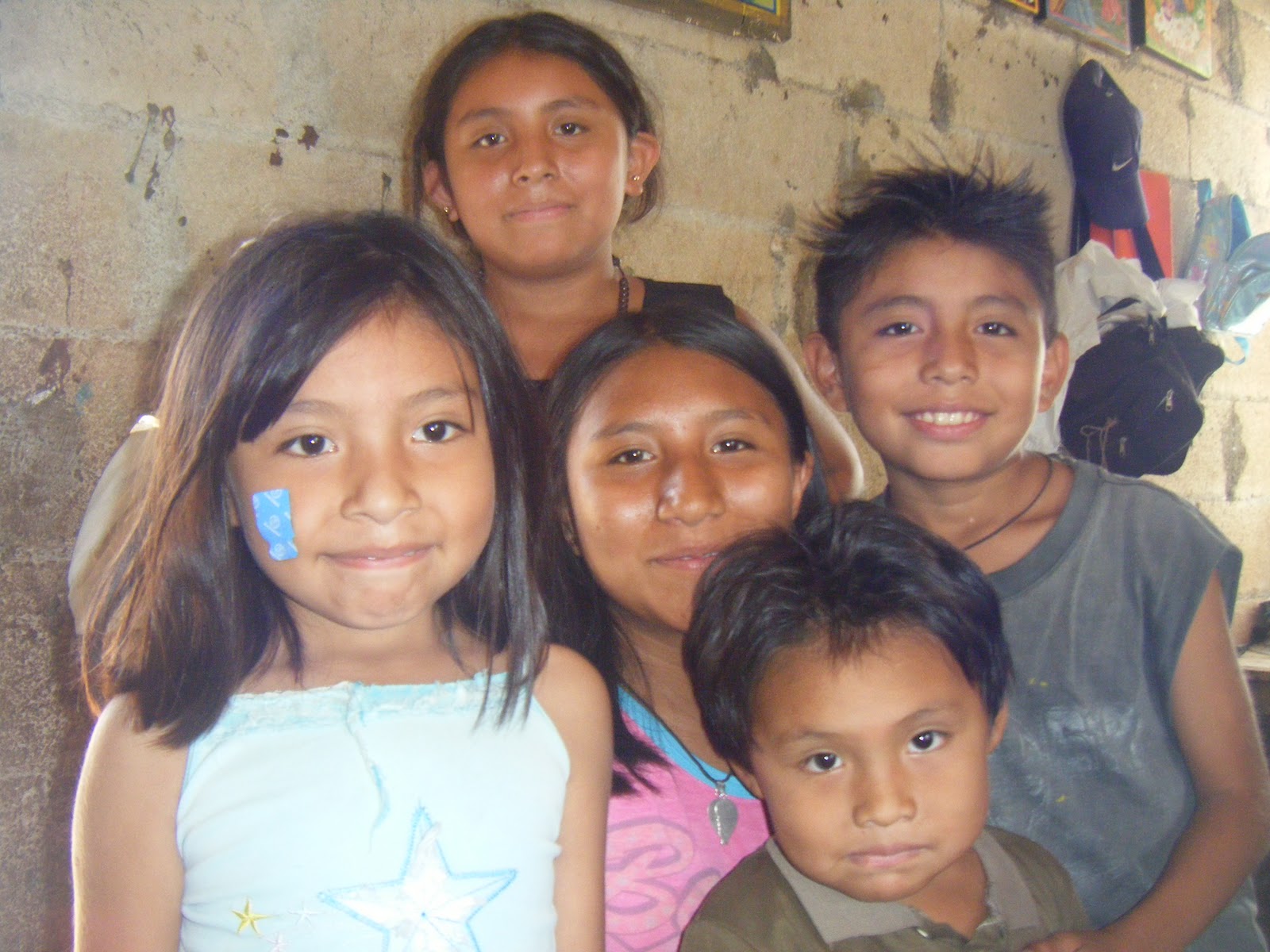
Thursday, 1 December 2011
Mother and grandmother

One of our families
Wednesday, 30 November 2011
Recruitment

------------------------------
Sent from my iPhone
Our research team posts these adverts in the schools so that mums can be present when their kids are measured.
Tuesday, 29 November 2011
When things don't go the way we plan...we adapt and make the most out of it
Today we had planned to go to Tecoh and work with a Maya grandmother. Hugo picked me up at 6.30am so we would have time to get the car, the equipment and the two other fieldworkers, Graciela and Frida (who is also an aeroplane pilot. How cool is this?)
By 8.30am we were waiting to meet our contact in the southern part of Merida. Our contact was the grandmother's daughter (i.e. the mother of the child whose nutritional status we have already assessed! Remember this is an intergenerational study and we are only interested in the matrilineal side of the question). Easy!
So we waited and waited and went to check at the lady's house and then went back to the school but she was nowhere to be seen.
Eventually we found the mother but, by then, she was unable to go with us and the assessment was reschedule for next week.
The following photos show a little bit of the area
By 8.30am we were waiting to meet our contact in the southern part of Merida. Our contact was the grandmother's daughter (i.e. the mother of the child whose nutritional status we have already assessed! Remember this is an intergenerational study and we are only interested in the matrilineal side of the question). Easy!
So we waited and waited and went to check at the lady's house and then went back to the school but she was nowhere to be seen.
 |
| This is one of the classrooms of the school |
 |
| The school is in front of a deactivated medical centre... however, today we saw about 20 nurses running a vaccination programme in the area |
Eventually we found the mother but, by then, she was unable to go with us and the assessment was reschedule for next week.
 |
| Hugo and Graciela talking to the mother and rescheduling the appointment to assess the grandmother |
The following photos show a little bit of the area
 |
| Outside the school |
 |
| Selling t-shirts |
 |
| Wind mill |
What's next
Tomorrow (Tuesday, 29th) we are going outside Merida to interview and measure an "abuelita"...a grandmother. We are leaving Merida at 6.30am.
http://maps.google.co.uk/maps?ie=UTF-8&hl=en&tab=wl
http://maps.google.co.uk/maps?ie=UTF-8&hl=en&tab=wl
Fieldwork summary
The data collection is going very well. Hugo, Graciela and the rest of the team are doing an amazing job recruiting children, mothers and grandmothers to participate in the study about "Intergenerational effects of the nutritional dual-burden upon the health and growth status of Maya children".
 |
| "Let's unload, people". All the fieldwork equipment is in the boot. Graciela commands the operations |
 |
| Hugo interviewing the mother |
 |
| Graciela talking to the children. The girl wants to be a teacher and the boy likes to cook and wants to be a chef. |
 |
| Inês and the children |
 |
| Measuring the height of the mother. We are so grateful to all these families who receive us in their houses and are so generous with their time. Thanks for your cooperation! |
 |
| Well done. Now let's pack again. |
Sunday, 27 November 2011
Another yucatecan meal

This is nachos with beans and melted cheese. They came with a side of fried plantains that amazingly came with a side of mayonnaise. It has been difficult to find low caloric food!! But there's only so much one can blame on jet lag so tomorrow I better start eating sensibly.


In Merida

I am in Merida now. Horribly long journey. Went for a walk this morning just to see if everything is still here ( aha!). I am glad to report that all is well. I have today (Sunday) only to recover from jet lag. Tomorrow we will start fieldwork and I am presenting my research on Wednesday. Need a rest now, but will upload some photos before. More soon. Gracias!
Thursday, 24 November 2011
New paper accepted
We have a new paper accepted for publication at Collegium Antropologicum
Varela-Silva MI, Dickinson F, Wilson H, Azcorra H, Griffiths P, Bogin B (2012).
The Nutritional Dual-Burden in Developing Countries. How is it Assessed and what Are the Health Implications? Collegium Antropologicum (accepted)
Varela-Silva MI, Dickinson F, Wilson H, Azcorra H, Griffiths P, Bogin B (2012).
The Nutritional Dual-Burden in Developing Countries. How is it Assessed and what Are the Health Implications? Collegium Antropologicum (accepted)
Invited speaker at the CINVESTAV 50th Anniversary conference in Merida
Inês is leaving to Mexico on Saturday very early in the morning to attend the celebrations of the 50th Anniversary of CINVESTAV. She will be a guest speaker there. The summary of her talk is here:
Title: The health status of the Maya: Summary of our research with CINVESTAV
Author: Dr Maria Ines Varela Silva, Lecturer in Human Biology at the Centre for Global Health and Human Development, Loughborough University, UK
Dr Varela-Silva's group has been conducting research with the Maya since 1992. The aims of this research are:
1. to understand the factors that shape health outcomes among Maya children and their families
2. to compare the health status of the Maya in Mexico and Guatemala with Maya migrants in the USA
3. to train new generations of researchers in their own countries so that this type of research can continuously be improved
4. to plan and implement meaningful interventions that will help improve the life and health status of the Maya families
During her talk Dr Varela-Silva will present data regarding health, nutritional status and growth outcomes of Maya groups. Overall, the Maya are very short and present a very high prevalence of chronic undernutrition (stunting). In the last 20 years the Maya are also showing a high prevalence of overweight and obesity. The coexistence of chronic undernutrition with overnutrition is a recent phenomenon designated as "dual burden of malnutrition". The causes of this phenomenon are complex and cover a range of behavioural, environmental, metabolic and intergenerational factors that act synergistically and produce a wide range of negative health outcomes. When the Maya migrate to the Unites States they show a very rapid increase in height, which is a positive indicator, but these migrants also show disproportionate increases in the rates of overweight and obesity that rank above the national references. Changes in nutrition and patterns of regular daily of physical activity explain, in part, this trend towards overweight/obesity but complex metabolic and epigenetic factors also seem to be part of the problem.
Dr Varela-Silva has also been delivering training sessions to researchers at CINVESTAV and other research units around the world. One of the missions of her research group is to further help the development of anthropology and allow researchers in their countries to continue meaningful research projects that have a positive impact on the health and wellbeing of the populations.
Implementing intervention programmes among the Maya families is also a goal that Dr Varela-Silva's team is pursuing. In this talk she will present some ideas on how to increase awareness among the Maya families regarding health-related issues.
Finally, Dr Varela-Silva will highlight the contribution of researchers at CINVESTAV - especially the collaboration with Dr Federico Dickinson.
Title: The health status of the Maya: Summary of our research with CINVESTAV
Author: Dr Maria Ines Varela Silva, Lecturer in Human Biology at the Centre for Global Health and Human Development, Loughborough University, UK
Dr Varela-Silva's group has been conducting research with the Maya since 1992. The aims of this research are:
1. to understand the factors that shape health outcomes among Maya children and their families
2. to compare the health status of the Maya in Mexico and Guatemala with Maya migrants in the USA
3. to train new generations of researchers in their own countries so that this type of research can continuously be improved
4. to plan and implement meaningful interventions that will help improve the life and health status of the Maya families
During her talk Dr Varela-Silva will present data regarding health, nutritional status and growth outcomes of Maya groups. Overall, the Maya are very short and present a very high prevalence of chronic undernutrition (stunting). In the last 20 years the Maya are also showing a high prevalence of overweight and obesity. The coexistence of chronic undernutrition with overnutrition is a recent phenomenon designated as "dual burden of malnutrition". The causes of this phenomenon are complex and cover a range of behavioural, environmental, metabolic and intergenerational factors that act synergistically and produce a wide range of negative health outcomes. When the Maya migrate to the Unites States they show a very rapid increase in height, which is a positive indicator, but these migrants also show disproportionate increases in the rates of overweight and obesity that rank above the national references. Changes in nutrition and patterns of regular daily of physical activity explain, in part, this trend towards overweight/obesity but complex metabolic and epigenetic factors also seem to be part of the problem.
Dr Varela-Silva has also been delivering training sessions to researchers at CINVESTAV and other research units around the world. One of the missions of her research group is to further help the development of anthropology and allow researchers in their countries to continue meaningful research projects that have a positive impact on the health and wellbeing of the populations.
Implementing intervention programmes among the Maya families is also a goal that Dr Varela-Silva's team is pursuing. In this talk she will present some ideas on how to increase awareness among the Maya families regarding health-related issues.
Finally, Dr Varela-Silva will highlight the contribution of researchers at CINVESTAV - especially the collaboration with Dr Federico Dickinson.
Tuesday, 27 September 2011
A new paper published
And Hannah is the first author of another paper.
"How useful is BMI in predicting adiposity indicators in a sample of Maya children and women with high levels of stunting?" American Journal of Human Biology (early view)
"How useful is BMI in predicting adiposity indicators in a sample of Maya children and women with high levels of stunting?" American Journal of Human Biology (early view)
Subscribe to:
Posts (Atom)